

Last updated on April 3rd, 2026 at 08:22 pm

There was a time I justified everything: the quiet life, the slowness, the distance from ambition’s noise. I had an explanation for it all, rehearsed and ready.
Thanks for reading Lovely Little Things! Subscribe for free to receive new posts and support my work.
There was a version of me who explained everything.
She explained why she lived where she lived—out in the rural quiet, away from lives that photograph well and translate easily at dinner parties.
She justified why she’d left a career that looked good from the outside.
She defended her days moving slowly, why she didn’t rush, and why she found meaning in small and ordinary things that most people scroll past without noticing.
She got very good at the explanations. She had them ready before anyone even asked.
I don’t know exactly when I stopped. There wasn’t a decision, exactly, no morning I woke up and resolved to be done with it. It was more like a conversation where I noticed the explanation forming in my throat and simply let it dissolve. The other person didn’t notice—but I did. Something was different.
That was the beginning of what I’ve come to think of as settledness.

What the Explaining Was Actually For
Here’s the thing I’ve had to be honest with myself about: most of the explaining wasn’t for the people I was explaining to.
I used to think I was clarifying my choices. Really, I was just auditioning for approval… complete with costume changes and a well-rehearsed monologue.
The only problem? The audience was mostly me… and I was a tough critic.
When you haven’t yet fully claimed a life, you rehearse its defense. You get your reasons organized. You anticipate the raised eyebrow, the polite confusion, the unspoken question: but don’t you want more than this?
So you prepare. You explain before anyone asks, because the explanation is the thing that makes the choice feel legitimate to yourself.
The explaining was never really for them. It was proof I hadn’t yet convinced myself.
Once I understood that, the shift made more sense. I didn’t stop explaining because I’d finally persuaded everyone around me.
I stopped because I no longer needed to persuade myself. The beautiful life I was living had become simply the beautiful life I was living, needing no more defense than a field needs to justify its stillness.
What People Think You’re Explaining
Rural life, slow living, the intentional stepping-back from hustle: these are choices that read as eccentric to people inside a different set of assumptions. The assumptions go something like this: more is better, busy means valuable, ambition points outward and upward, and a life that slows down is a life that has given up something.
Inside those assumptions, your choices require explanation. Of course they do. You’re speaking a different language than the one the room expects. I spent years trying to translate contentment into a dialect that ambition could understand.
It never worked.
What I finally understood is that no explanation was ever going to bridge that gap. You can’t logic someone into understanding a life they haven’t lived. (I tried. It’s exhausting.)
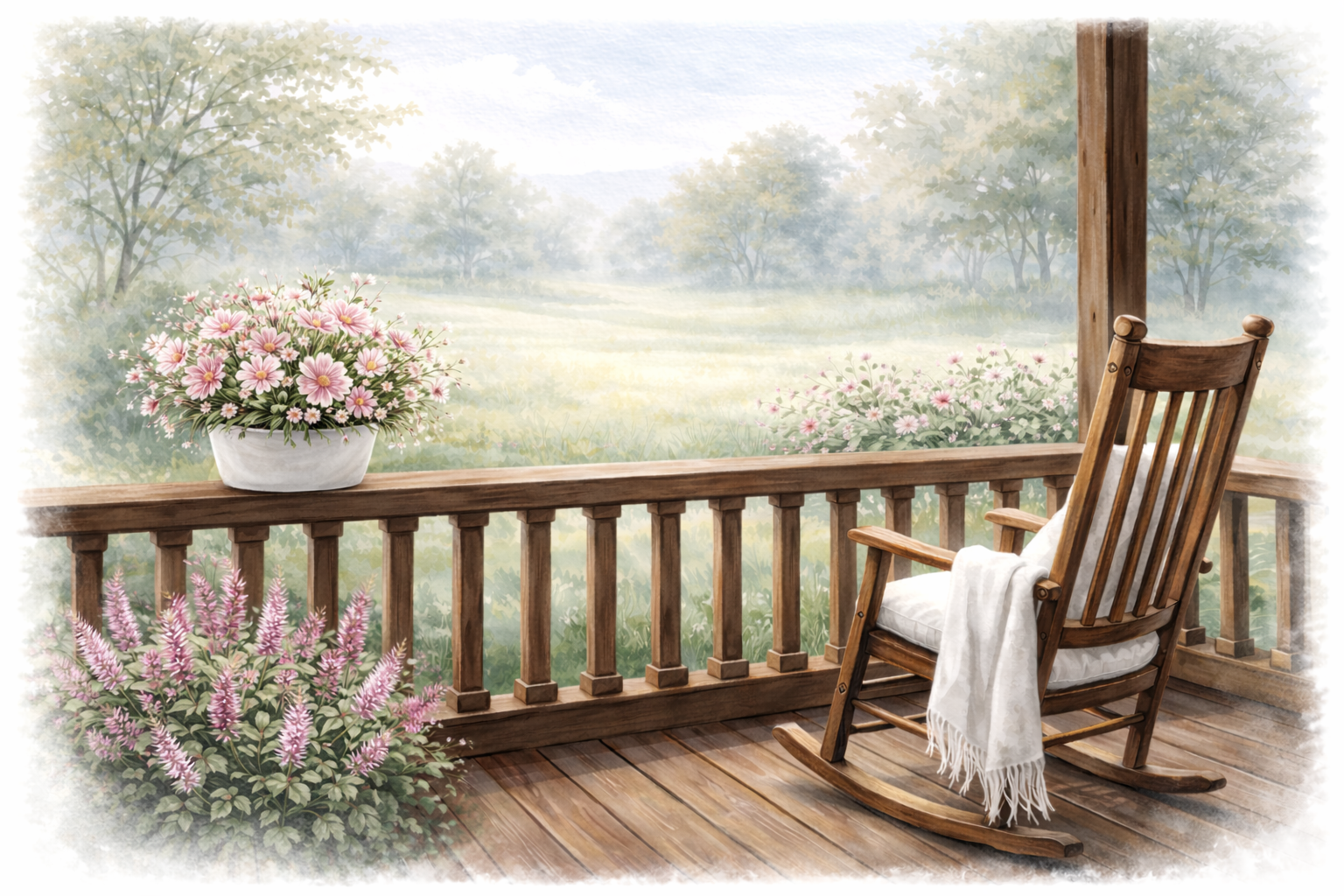
You can describe the morning light on old wood. You can talk about what it means to watch something grow from seed. You can explain the particular satisfaction of a day that moved at your own pace through your own land toward your own priorities.
They’ll nod. They might even say it sounds lovely.
But they won’t understand it from the inside, because understanding it from the inside requires living it.
The explaining was always trying to do something it couldn’t do.
What Settledness Actually Feels Like
I want to be careful here, because settledness is easy to confuse with a few things it isn’t.
It isn’t indifference to other people. I care deeply about the people in my life, including the ones who live differently than I do.
Settledness also doesn’t mean you’ve stopped being curious about other ways of being in the world.
It isn’t superiority. The woman who’s settled in her life doesn’t need to believe her choices are better than anyone else’s. She just needs to believe they’re right for her, and she’s crossed over into actually believing it rather than arguing for it.
It isn’t defiance. Defiance still requires an audience. It’s still performing, just with a different costume.
Settledness has no audience requirement. It doesn’t need anyone watching to feel real.
It just is.
Settledness isn’t a wall you build. It’s a morning you wake up and realize you stopped needing one.
What it actually feels like is spaciousness. Like a room that’s been cleared of furniture you’d stopped noticing but had been working around for years. You move differently in that room. You breathe differently. The things that are left are the things that actually matter.
The Choices That Used to Require the Most Explaining
The pace. That one drew the most commentary. Why so slow? Why not more? Don’t you get bored?
As if boredom were the worst thing that could happen to a person, instead of, say, a calendar that looks like a war zone.
I spent a long time explaining that slowness isn’t the absence of something. It’s a different relationship to time, to attention, to what a day is actually for. I tried to explain the way a slow morning teaches you things a rushed one can’t, the way unhurried attention makes ordinary things visible.
The land. Living rurally, by choice, in a season when everyone seems to be moving toward cities and density and connection: this one also confused people. I explained the multigenerational homestead, the grandchildren daily underfoot, the way a piece of land holds memory in its soil and seasons across generations.
The priorities. Reading over scrolling. Journaling over networking. The quiet creative life over the documented one. These required the most elaborate explanations, because they were the choices most likely to look like failure from the outside.
I don’t explain any of them now, not because I’ve become secretive about my life but because the explaining has simply stopped arising.
The choices are just the choices. They’re mine, they’re right, they’re home.
What Stopping the Explaining Made Room For
This is the part I didn’t expect.
When you stop explaining, you stop bracing. You stop the low-level preparation that runs underneath so many conversations: getting your reasons ready, scanning for the skeptical question, deciding in advance how much of yourself you’re willing to share and how much you’ll protect.
When that stops, something opens up. Conversations get easier, not because they’re shallower but because you’re not managing them the same way. You can be curious about other people’s lives without feeling like you’re in competition with them. You can hear about someone else’s choices without needing to quietly defend your own.
I didn’t stop explaining because I won the argument. I stopped because I finally understood there wasn’t one.
— Mary Kaye Chambers
There’s also something that happens with your own interior life. When you’re not spending energy justifying your choices outward, that energy goes somewhere else. It goes toward the choices themselves. Toward living them more fully rather than defending them more cleverly.
The unhurried life became more unhurried when I stopped spending part of it in argument with an imaginary critic.
For the Woman Still Explaining
If you’re still in the explaining season, I want to say something clearly: you’re not doing it wrong.
The explaining is often necessary work.
It’s the work of figuring out what you actually believe, of stress-testing your choices against the friction of other people’s skepticism.
Sometimes it reveals something you needed to know. Sometimes it makes you articulate something you’d only half understood. That has value.
The shift I’m describing isn’t something you can force or schedule. It arrives when the work is done, when you’ve explained enough times that you hear your own reasons become true rather than just reasonable.
When you notice the explanation forming in your throat and feel, for the first time, no particular need to let it out, that’s the moment. You’ll recognize it. It’s quieter than you’d expect, and more permanent.
You’ll know it’s settledness and not just exhaustion because it won’t feel like giving up.
It’ll feel like stepping into sunlight after a long walk in shade.

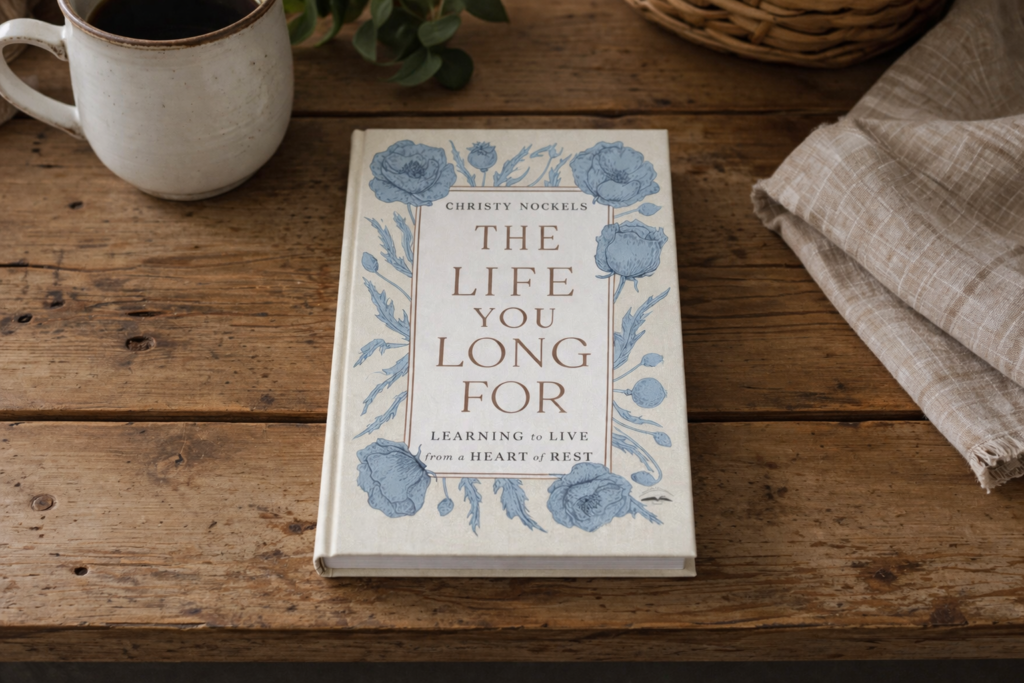
If this reflection on moving from explaining to a deeper groundedness resonates with you, I recommend The Life You Long For by Christy Nockels. It’s a beautiful, Scripture-rich invitation to release the hustle and live from a heart at rest in God — very much in the spirit of what I’ve shared here.
🪞 Reflect & Review
1. What choice in your life have you explained the most? When you replay those explanations now, who were they actually for? What would it mean to stop needing to make that particular case?
2. Is there a difference, for you, between being settled in a choice and being indifferent to what others think? Where does that line sit, and how do you know when you’ve crossed into one versus the other?
3. What would you do differently with the energy you currently spend managing how your life looks to people outside it? Where would that energy go if you simply stopped?
💌 Before You Go
If you’ve had your own version of this moment, I’d genuinely love to hear it in the comments. The details are always different but the feeling, I think, is the same: quieter than expected, more permanent than a decision, and very much like coming home. This one is worth sharing with a woman who’s still in the explaining season and ready to be done.
Thanks for reading! Subscribe for free to receive new posts and support my work.
Great content! Keep up the good work!